

GARYEOW GARYLEI ARCHITECTURE
x
WEEK 1 - 3 SITE ANALYSIS PRESENTATION
ADP progress log book
WEEK 4
my given site is site 4, located in between Istana Budaya office (west) and Stadium Titiwangsa (east). Front facing Titiwangsa Lake, whereas tennis courts and canoe club at the back.
the project titled as sport and recreation center.
in speaking of genius loci, or the sense of the place, titiwangsa lake gardens is pretty vibrant and active, by observing the human activities - mainly exercising and jogging (sports). Until i found there's a big gap between the lake, key water body of the garden and the users.
The lake is simply treated as a mirror, just to reflecting the view of KL skylines, complimenting its ambitious, iconic city image. But the lake itself is a dirty lake, with some fancy water fountain, but there's nothing to do with water sports that supposed to be happening. If we are talking about the relationship with nature or the landscape, it is obviously the lake should be included for public to interact with the water - its fluidity, its temperature, its waves. It is not supposed to be just looked as one picturesque scenario, but it should bond with users.
The first proposal includes quite some programmes, mainly extreme sports - canoe, rock climbing, skateboarding, target on youngsters from the community. But it is too general and broad, which is difficult to come out a specific building function.
WEEK 5
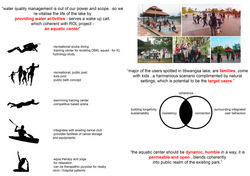
so i came out with an idea, why not a building (aquatic center) provides water-related activities - canoeing, swimming, scuba diving, aquatic yoga / gym. The target users are the families.
By doing so, the center able to trigger and serve as a wake-up call to "publish" a statement that the park is belonging to everyone, its about sense of public ownership. And the current "dead" condition of the lake is in urge to be fixed by everyone, it's not only responsibility by authority or management, but the public should involved in maintaining the park environment. It is part of the strategy that coherent, running parallel with ROL (river of life) project.
Canoe - it is one of the existing popular activities in titiwangsa lake. Due to the contamination issue of the lake water, it has been forced to stop and public or even the club members unable to use the lake to train / recreational canoeing.
Swimming - in 1960s, when the government proposed to refurbish the lake, swimming complex was one of the proposal, until now it is not being facilitated. Therefore, it is compulsory to have swim training pool, leisure pool (for family), especially cater for surrounding areas like Sentul, Pekeliling, Kepong, Cheras which don't have public swimming pool.
Scuba diving - it is interesting to see actually people dives into titiwangsa lake, for recreational purpose. DBKL rescue squad, using the lake as one of the training site. Their job is to investigate the water quality of the major rivers in KL, as well as finding out the issues of flash flood in KL. Therefore the proposal impact and function no longer serving in the site boundary, but it is far as we expected.
Aquatic yoga / therapy - one of the stress relieving tool for people who living in city. in response to nearby medical institutional, this may helps in recovering the patients. The engagement of users no longer just between families, but expand to wider circle of socialization.
Throughout the days, models been made the explore the relationship between programmes, and its layout. Hence, it resulted the form of the building that can be appealing to the users / viewers.
Precedent studies -
Sayamaike Museum by Tadao Ando - study of poetic relationship with water, potential to relate with titiwangsa lake water drawn into aquatic center
The Building on the Water by Alvaro Siza - study of water element and built structure, which able to be "game changer" to twist the appearance of the architecture
Water Culture Hosue by BIG - interesting "evolution" of swimming nature and traditions, breaks the boundary of which swimming activities can be
 |  |
|---|
 |  |
|---|---|
 |  |
 |  |
 |  |
 |  |
 |
WEEK 7
to further develop the project brief (water activity center), the master planning of bringing in water is not allowed in the module, therefore i have to rethink the design scheme, which correspond the initial idea - issue of ownership in titiwangsa lake park.
below are the works that i did for relationship between spaces, and the ground networking strategy.


initial idea of design statement

schematic design of ground floor - where most of the area covered with water, buildings elevated over, therefore created a large water footprint for public bath. voids were created to allow interaction among floors.
WEEK 8 (22 October)
since the previous design intention was "ambitious" and hardly to be achieved without the lake water in building, so i came out with a thought :
why is the water polluted? and the user(s) didnt do anything? the users who use the park to picnic or jog or cycle, they doesnt seem they care about the water or park infrastructure condition. well i understand their ability and they cant do anything regarding to the pollution, but obviously that sense of belonging or ownership is not there. the public or communal responsibility is hardly noticed.
ps : the responsibility i meant is the initiative the users take to make the park better and cleaner.
one of the best example to illustrate a good park is Sentul Park, where i visited again to discover why it is so well managed. yes, it is undertaken by YTL company, but it is still accessible for public, to observe the old buildings and its journey. the key is the interplay of private and public is well practice.
WATER ACTIVITY CENTER
therefore the building, as part of the park, should be balance in public and private spaces. it should be so permeable and accessible for all, but it has to be an entity, an identity where people know when they enter. my design intention is to create that "space" into a "place"...they feel they belong to that place, and this place also can tells where titiwangsa's history belongs.
design strategy :
water as story teller,
-it tells history and narration of titiwangsa formation (i pretty sure most of the users didnt know it was a mining lake and how it affects hospital KL) - important spaces like gallery, reflection pool
-it tells the importance of public bath (not theme park) - important spaces like public pool
-it tells how water as sports and recreational - important spaces like swimming pool, canoe facilities
-it tells how water "congregate" and foster family sense - important spaces like nursery, family area, temporary accomodation
(PUBLIC SPACES FORMATION)
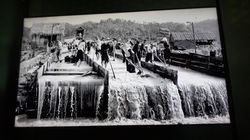
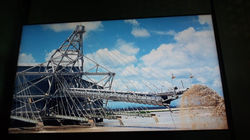
i was inspired by the old pictures taken of mining industry at KL, and it was really interesting to bring back the essence of it. what i found fascinating is about how architecture involved in the process (the houses, bridges, water tunnel) and how the journey from building to building.
what if the building able to bring back this heritage mining culture and allow user to understand the origin of titiwangsa lake and even KL, by translating the temporary structures are. from the pictures we are able to see how building footprint stands in an open area, which is for circulation and human activities.
*Royal Selangor Visitor Center only provide the some understanding of mining industry and more toward on how it "promotes" their products. so my building able to provide some information of KL mining.*
 |  |
|---|---|
 |  |
 |  |
 |  |
 |  |
 |  |
 |  |
(PRIVATE SPACES FORMATION)
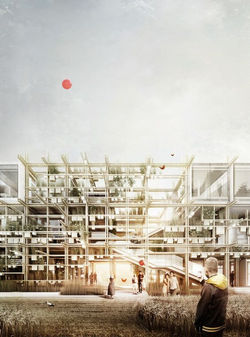
in speaking of sense of belonging, kampung houses are pretty nostalgic and memorable for most of the malaysians. a kampung compound is usually semi public, in a way that neighbours are allowed to go one house to another to talk with friends, or even relatives. that friendly neighbourhood village-like community spaces are crucial in public communication. but individual kampung house are private, which give a sense of individuality and privacy.
what if each kampung houses build like a module unit, and fit into a clustered typology like mining field? so heres some references.
it can be more like spaces within a space. private in public. interlocking cluster within a space.
 |  |
|---|---|
 |  |
 |  |
 |  |
PRECEDENT STUDY - Allmannajuvet Zinc Mine Museum by Peter Zumthor
even though this is an installation project, but it is a good example to study which buildings being placed in clustered individual units, which encourage user to explore one by one, and enjoy the journey of mining.
2nd attempt *proper architectural plans are preparing now*
 |  |  |
|---|---|---|
 |  |  |
 |  |
 |  |  |
|---|---|---|
 |  |
first attempt study model
interim 2
 |  |  |
|---|---|---|
 |  |  |
 |
to further develop the design, i revise the kampung design to strengthen the sense of belonging and ownership by "marriage" of traditional technique and modern technology:
-the spatial organization of kampung houses, its modularity and flexibility
-how kampung house response to water use (especially rainwater and roof profile + slope)
-how materiality enhances its thermal comfort quality and aesthetic looks
-how technology nowadays allow the "bringing back" of memorable heritage water kampung life with natural swimming pool concept (predecent study : thames bath)


 |  |  |
|---|---|---|
 |  |
study model + schematic floor plan
 |  |  |
|---|---|---|
 |  |  |
 |
next step :
looking for tectonics and potential construction method to enrich the concept
add in more programmes to enrich the building function, since its not fulfilling the requirement GFA